Youtube Region Restriction Checker
Youtube Region Restriction Checker
Ever clicked excitedly on a YouTube video only to get that soul-crushing message: "This video is not available in your country"? Frustrating, right? You're not alone – millions of viewers slam into these digital walls daily.
Want to know if that viral video, educational tutorial, or obscure documentary will actually play before you get your hopes up? That's where a YouTube region restriction checker becomes your new best friend.
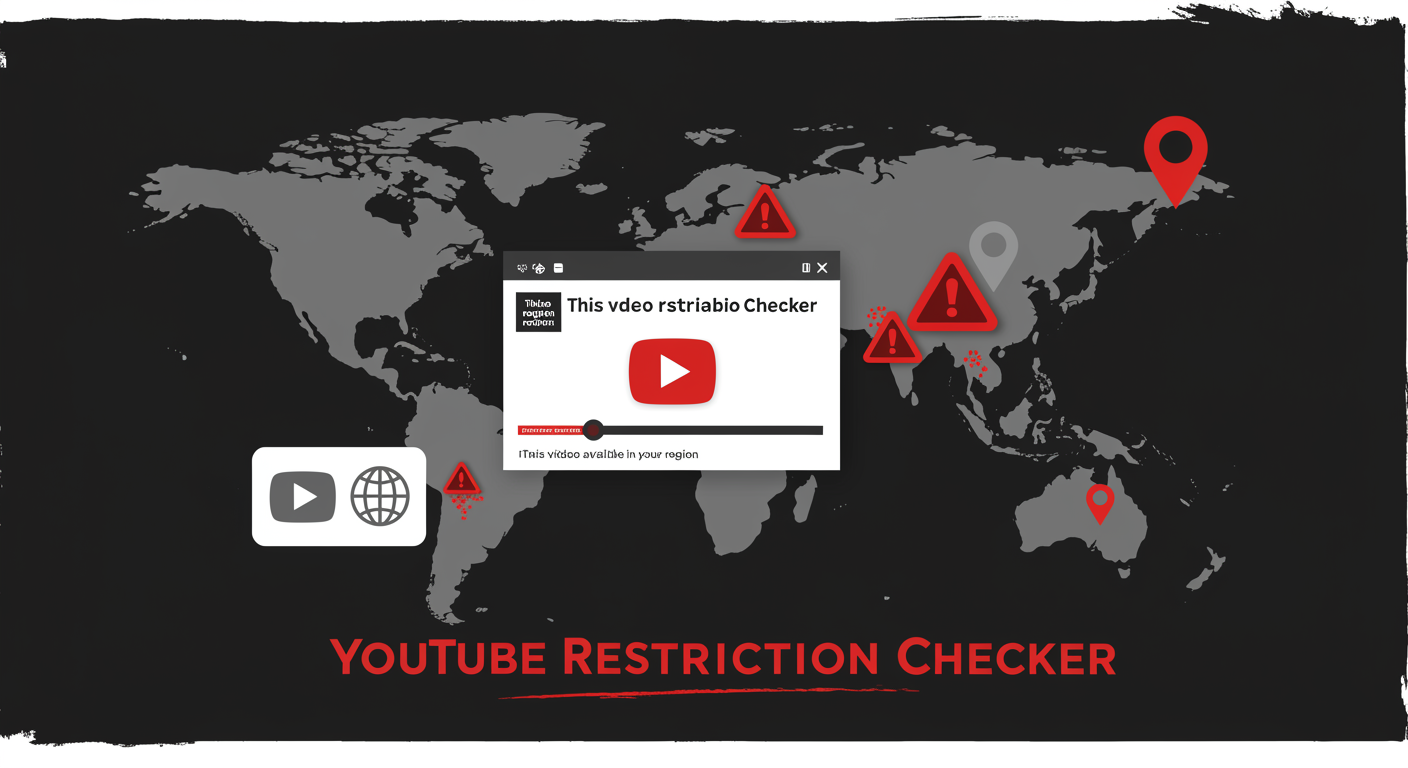
These handy tools let you peek behind the geo-blocking curtain, showing exactly where content is available and where it's locked away. No more wasted clicks or disappointment.
But not all region checkers are created equal, and some might leave you more confused than when you started. So what separates the genuinely useful tools from the duds?
The Information You Get from This Tool:
Ever wondered what details you'll actually see when you use a YouTube region restriction checker? These tools give you more than just a simple "yes" or "no" answer. Here's what you'll discover:
Video Availability Map
Most YouTube region restriction checkers show you a color-coded world map that instantly tells you where a video is available. Green countries? You're good to go. Red ones? Sorry, that content is blocked there.
Country-by-Country Breakdown
You'll get a detailed list showing exactly which countries can access the video and which ones can't. This is super helpful if you're planning content for an international audience or trying to understand why certain videos aren't reaching specific markets.
Restriction Reasons
The better tools will even tell you why a video is restricted in certain regions. Could be:
-
Copyright limitations
-
Local laws and regulations
-
Creator's own settings
-
YouTube's content policies
Alternative Access Methods
Some checkers go the extra mile and suggest ways to legally access the restricted content, like:
-
Using a VPN (though YouTube's terms of service have something to say about that)
-
Waiting for official releases in your region
-
Finding similar content that isn't restricted
This information helps content creators understand their global reach and gives viewers insight into why they might be missing out on certain videos. Knowledge is power when dealing with YouTube region restrictions!
YouTube Video Region Restriction Checker Usage:
How to Use the Tool (step by step)
The YouTube Region Restriction Checker is super easy to use—trust me, even my tech-challenged uncle figured it out in seconds. Here's how to check if videos are blocked in specific countries:
-
Visit the checker website - Open any reliable YouTube region restriction checker tool in your browser.
-
Copy the YouTube video URL - Go to the video you want to check and copy its full URL from the address bar or use the "Share" button beneath the video.
-
Paste the URL into the checker - Look for the input field on the tool's homepage and paste your copied URL.
-
Select countries to check (optional) - Some tools let you pick specific countries to check against. If you're targeting specific regions, select them from the dropdown menu.
-
Click "Check" or "Submit" - Hit the button and wait a few seconds for the results.
-
Review the results - The tool will display a list of countries where the video is available or blocked.
That's it! No registration needed, no complicated settings to figure out. If you discover your favorite video is region-locked, you might want to check out VPN solutions to bypass YouTube region restrictions—but that's a topic for another day.
FAQs
Why Would a Video Be Restricted or Banned in Other Countries?
Videos get region-locked for several key reasons. Copyright laws vary wildly between countries - what's perfectly legal in the US might violate copyright in Germany. Content creators often sign distribution deals that limit where their videos can appear. Then there's the censorship factor - governments block content they deem inappropriate, political, or threatening to national security. YouTube must comply with local laws, so they geo-restrict videos accordingly.
Are Free YouTube Unblockers Safe to Use?
Free unblockers come with real risks. Many inject malware, adware, or spyware into your device while you're busy watching that blocked video. Some harvest your data and sell it to advertisers. Even worse, sketchy free services might redirect you to phishing sites. Premium VPNs generally offer better security with proper encryption and no-logs policies. If you must use a free option, stick to reputable providers like ProtonVPN or Windscribe that offer limited free plans.
May I Use a Free VPN to Access Content from Other Regions on YouTube?
You can try, but free VPNs usually struggle with YouTube. They typically offer few server locations, making region-hopping difficult. Their connection speeds are often terrible, leading to constant buffering. YouTube actively blocks known VPN IP addresses, and free VPNs rarely update their IPs. Many free VPNs also cap your data usage, so your video might cut off mid-stream. Paid VPNs generally work much better for consistent YouTube access.
Is It Legal to Unblock YouTube?
The legality exists in a gray area. Using a VPN isn't illegal in most countries (though they're banned in China, Russia, and some Middle Eastern nations). However, bypassing geo-restrictions might violate YouTube's Terms of Service, potentially resulting in account suspension. You're not breaking copyright law directly, but you're circumventing systems designed to enforce those laws. The real risk is typically to your account standing rather than legal prosecution.
Which Are the Countries that Have Been Banned by YouTube?
YouTube isn't available in several countries due to government restrictions:
-
China (since 2009)
-
North Korea
-
Iran (periodically blocked)
-
Turkmenistan
-
Syria (intermittent access)
-
Eritrea
Some countries like Pakistan, Bangladesh, and Turkey have temporarily banned YouTube during political unrest or after controversial content appeared on the platform.
Does Disabling Embedding Feature Affect My Video Performance?
Absolutely. Disabling embedding can significantly hurt your video's reach. When embedding is allowed, your content can appear on blogs, news sites, forums, and other websites, driving substantial traffic and new viewers. These external embeds count toward your view numbers and watch time. They also increase the chances of your video being shared across different platforms. For most creators, allowing embedding leads to better performance metrics and wider audience reach.
What Happens If My Video Is Age-restricted?
Age-restricted videos take a serious hit. They won't appear in recommendations, trending sections, or on the homepage. They're excluded from notifications and won't show up when users browse with Restricted Mode enabled. You can't monetize these videos, and they won't display ads. They require viewers to be logged in and have verified ages. All this drastically reduces visibility and potential earnings. YouTube typically age-restricts content with violence, nudity, harmful activities, or vulgar language.
Is It Possible to Embed Age-restricted Videos?
No, you can't embed age-restricted YouTube videos on external websites. YouTube prevents embedding these videos to maintain age verification controls. When someone tries to embed an age-restricted video, they'll get an error message, or viewers will see a message directing them back to YouTube to verify their age. This is part of YouTube's child protection measures and is non-negotiable - there's no workaround if your video has received an official age restriction.
Why Are Some Videos Only Allowed in One Country?
Some videos have extremely limited availability due to exclusive licensing deals for specific markets. Music videos are common examples - a record label might have different distribution partners in different regions. Some creators deliberately target single countries when testing marketing strategies or running location-specific campaigns. Local TV shows might only have online rights in their home country. In rare cases, content might comply with only one country's specific laws or standards, making broader distribution legally risky.
Conclusion
Understanding YouTube region restrictions has never been easier with this practical checker tool. By simply entering a video URL, you can instantly see where your favorite content is available worldwide, helping you navigate geographical limitations that might be preventing access to videos.
Whether you're a content creator tracking your global reach or a viewer trying to access region-restricted videos, this tool provides valuable insights with just a few clicks. Remember that while region restrictions exist for licensing and copyright reasons, staying informed about content availability helps you make better decisions about accessing or sharing YouTube videos across borders.